6 Lessons From Alex Lieberman's 200K LinkedIn Engine

I analyzed 1,857 posts across 3 years. Here's the system behind his volume — and what founders can steal.

We don't own this content. Please give love to the original creator on LinkedIn.
Published March 3, 2026By Jorrit van Ginkel5 min read

3 Years of Compounding

Quarterly total engagement — from scrappy video clips in 2023 to 200k followers and 3,500+ reaction posts.

1,857
Posts Analyzed
3+ years
Time Span
1.6
Avg Posts/Day

Most founders know LinkedIn matters, yet the blank page still wins. Every post feels like inventing something from scratch — and when you finally do hit publish, you wonder if you sounded like every other "thought leader" on the platform.

Alex Lieberman solved that problem with a system. 1,857 posts later, he's built 200k followers while running multiple companies — and his highest-performing post in six months is literally marked #ad.

He started in January 2023 posting short video clips with a median of 76 reactions. Three years later: 200,000 followers, 75% text content, and posts regularly hitting 500+ reactions. The system compounded.

"But he had Morning Brew." Sure — but 1,857 posts in three years is 1.6 posts per day. That volume would build an audience for almost anyone with something useful to say. The exit gave him a head start on credibility; the system is what kept the compounding going. And the system is what you can steal.

1. The Content Rotation System

Alex doesn't wake up asking "what should I post today?" He pulls from one of five buckets, and that simple system is what keeps him from ever staring at a blank page.

His five content pillars:

  1. Industry takes position him as a thinker — posts like "The average CEO cannot tell you the difference between an automation and an AI agent"
  2. Borrowed frameworks let him be educational without claiming invention — "I stole this idea" is a recurring opener
  3. Company updates turn recruiting and business news into content — "I need to hire 100 people in 12 months" works as both job post and positioning
  4. Personal stories humanize him at scale — his 200k follower post told his entire life arc in four chapters
  5. Lists and hot takes drive engagement — "You have questionable integrity if..." is a perfect example

He rotates through these pillars, never exhausts one bucket before moving to the next, which means he never runs dry.

The Rotation in Action

Different buckets, same week. Swipe to see the variety.

Alex Lieberman
Cofounder @ Morning Brew, Tenex, and storyarb
5mo

The average CEO cannot tell you the difference between an automation and an AI agent. This breakdown (h/t Wade Foster) makes it glaringly obvious. An automation is anything that requires no-trust decision making (if this, then that). An AI agent is anything that requires some-trust decision making. The most powerful workflows that I’m seeing businesses use today are neither pure automations nor pure agents. They’re agentic workflows. Agentic workflows get the leverage of AI (read: intelligent decision making) that deterministic software never offered. But they also have the predictability of automations, where the cost of error is too high. Knowledge work will continue to get pushed further right on this spectrum as the technology improves, but today living in the middle is often the sweet spot.

Post media
969·119 comments·38 reposts
LikeLike
CommentComment
RepostRepost
SendSend
Format: Framework / Mental ModelHook: Bold Claim
Alex Lieberman
Cofounder @ Morning Brew, Tenex, and storyarb
5mo

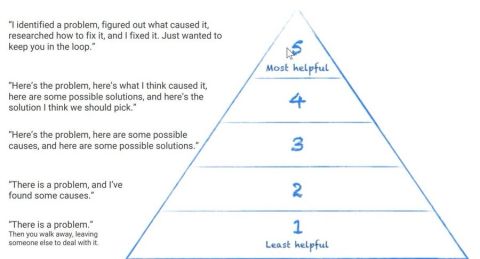
I stole this idea and now use it with every single employee. It’s the best illustration I’ve seen of teaching someone to be high agency. It says there are 5 levels of work: Level 1: “There is a problem.” Level 2: “There is a problem, and I’ve found some causes.” Level 3: “Here’s the problem, here are some possible causes, and here are some possible solutions.” Level 4: “Here’s the problem, here’s what I think caused it, here are some possible solutions, and here’s the one I think we should pick.” Level 5: “I identified a problem, figured out what caused it, researched how to fix it, and I fixed it. Just wanted to keep you in the loop.” Using this framework, here’s what I say to every new employee… You will live at Level 4 from Day 1 and as we build trust you will rise to Level 5. Being high agency doesn’t just mean tackling problems in this way. It means your entire way of working should be oriented to being a Level 4+ employee. Plz feel free to steal it as well. And ty Steph Smith for the framework!

Post media
1,529·125 comments·85 reposts
LikeLike
CommentComment
RepostRepost
SendSend
Format: Framework / Mental ModelHook: Bold Claim
Alex Lieberman
Cofounder @ Morning Brew, Tenex, and storyarb
3mo

I need to hire 100 people in the next 12 months. Tenex is a rocket ship. Unlike anything i've seen. Our biggest bottleneck is keeping up hiring with the tidal wave of demand we're seeing. Which takes me to the first role I need to fill: Director of People Ops. We need a hands-on, foundational leader who will build and scale the People function as the company grows from ~15 to 100 employees and beyond. Must haves: - 5–10 years in HR/People Ops, ideally across multiple scaling stages (50–250 employees) - Prior experience as a Head of, Director, or Senior Manager of People in a high-growth SaaS or startup. - Pumped to own all aspects of People Ops, Employee Experience, Compliance, and Talent Development That leads me to the other 2 roles we're hiring for, the dynamic duo of client delivery in our business. Next up: AI Strategist. You are the voice of the customer. If a customer success savant & world-class PM had a baby, it'd look like our AI Strategist. The job: Translate client goals into reality by uncovering bottlenecks and inefficiencies, aligning stakeholders, and executing change‑management and software‑implementation plans that unlock AI‑driven leverage. Must haves: deeply technical + previous experience as a technical consultant, PM, sales engineer, or similar role. Last up, is their technical partner: the Forward Deployed Engineer. Must-haves: elite engineering chops, AI-first mindset, relentless curiosity, team multiplier, client-facing. Oh...one more thing...your comp range is $250,000-$800,000. Why? It's uncapped (based on storypoint output). We pay you like a salesperson. Links to all jobs here: https://lnkd.in/edXZjyc8

873·176 comments·70 reposts
LikeLike
CommentComment
RepostRepost
SendSend
Format: AnnouncementHook: Number/Stat Hook
Alex Lieberman
Cofounder @ Morning Brew, Tenex, and storyarb
5mo

You have questionable integrity if: - You treat waiters poorly - You leave a shopping cart in the parking lot - You don’t pick up your dog’s sh*t - You double park - You don’t give your doorman a holiday gift - You throw trash out of your window while driving - You purposefully join the wrong flight boarding group - You take credit for other peoples’ work - You gossip about coworkers instead of giving feedback directly - You don’t apologize for being late to a call

602·130 comments·5 reposts
LikeLike
CommentComment
RepostRepost
SendSend
Format: Ethical ConsiderationHook: Bold Claim
Alex Lieberman
Cofounder @ Morning Brew, Tenex, and storyarb
5mo

Unofficial startup milestones: 1) buying the domain 2) creating first@company[.]com email 3) switching from personal to company laptops 4) creating your first custom emoji in slack 5) making employee onboarding more than "here's your desk" 6) first time you fill a conference room table 7) dental plan switches from being bags of flossers 8) office humor becomes politically correct 9) getting sued 10) when HR actually exists 11) when you make it home for dinner 12) shoes switch to close-toed 13) the office snack stash isn't beef jerky & coffee pods in the founder's backpack 14) when sales switch from being founder-led 15) creating a pat/mat leave policy for the first time 16) not being worried about making payroll 17) first news hit 18) making 30 under 30 and not going to jail

866·101 comments·10 reposts
LikeLike
CommentComment
RepostRepost
SendSend
Format: Pattern ObservationHook: Observation/Insight Hook

His format evolution tells its own story. In 2023, his content was 66% text, 21% video, and 13% image — he was investing heavily in video series. By 2025, the mix has shifted to 76% text, just 5% video, and 18% image. He tested for years, then doubled down on what worked.

What his week actually looks like: He posts roughly 10x per week. Based on the data, there's no strict day-of-week pattern — he posts most on Wednesday and Tuesday, least on Sunday. He doesn't have "Framework Friday" or "Story Monday" — he rotates through buckets regardless of day. The takeaway: don't overthink scheduling. Rotate content types, stay consistent, skip the elaborate calendar.

"But I can't post 1.6 times a day" — The insight here isn't volume, it's rotation. Posting three times a week from five different buckets beats posting once a week while agonizing over perfection. The bucket system means you're never "out of ideas." You're just pulling from a different drawer.

The realistic 3x/week version: If you can only post three times a week, here's how to apply the rotation:

  • Week 1: Industry take → Framework → Personal story
  • Week 2: Hot take → Company update → Industry take
  • Week 3: Repeat, never same bucket twice in a row

Three posts a week from different buckets beats seven posts a week from the same bucket. The variety is the system, not the volume.

What most people do

Open LinkedIn, stare at cursor, think 'I have nothing to say,' close tab.

What Alex does

'I haven't posted from the framework bucket in three days — let me share that Wade Foster diagram.'

This works for any industry. A B2B SaaS founder's buckets might be: product updates, customer wins, industry hot takes, frameworks from books, and lessons from mistakes. Different content, same system.

How to implement this

First step

Write these 5 buckets on separate post-its and stick them to your monitor: Industry take, Framework, Company update, Personal story, Hot take. Flip over the one you post from today.

Set up your triggers

  • 1Morning: Check which post-it hasn't been flipped in a while — that's today's bucket.
  • 2After a meeting: Jot down one thing that happened that could become a Company update or Personal story.
  • 3Before you write: Use your bucket's trigger question (Industry → "What's everyone getting wrong?" Framework → "What changed how I work?")
  • 4End of week: Review your flipped post-its. Notice which bucket your audience responds to most.

2. The Bold Claim Machine

His most consistent hook pattern isn't questions or statistics. It's confident assertions that make you want to either argue or agree — and either reaction is engagement.

Hook Performance by Type

Average reactions by hook type (last 9 months, minimum 10 posts)

Avg reactions per hook type

Which hook drives the most engagement?

Only hook types with 10+ posts are shown. Hover a bar to see real opening-line examples for each hook type.

The numbers back this up: he's published over 72 posts with "Bold Claim" as the hook type since June 2025, and they average 170 reactions compared to his overall median of 88. The pattern is simple — he opens with a statement that sounds almost arrogant, follows with evidence, and creates a tension-to-resolution arc.

Caveat: These numbers don't account for posts he may have deleted, and his credibility likely affects how bold claims land. A first-time poster writing "The average CEO cannot..." might get ignored. But the pattern holds: confident assertions outperform soft questions.

Alex Lieberman
Cofounder @ Morning Brew, Tenex, and storyarb
1y

Hire a 22-year-old digital native that gives a shit about your industry. Let them fire off in-niche memes, replies, and posts as if they’re running their own account. This is how most companies should run their social.

3,644·380 comments·118 reposts
LikeLike
CommentComment
RepostRepost
SendSend
Format: Strategy vs. TacticHook: Controversial/Hot Take

"Hire a 22-year-old digital native that gives a shit about your industry." At 3,644 reactions, this works because the bold opening isn't about him — it's a direct challenge to how companies run social media. The statement is controversial but defensible.

Alex Lieberman
Cofounder @ Morning Brew, Tenex, and storyarb
2y

I’ve started to do something strange but I think it makes sense. When I hire, I send all of the questions to a candidate before the interview. Unless you’re evaluating for quick-thinking, I’m not sure why we should surprise candidates. I’d rather that they have the time to prepare and demonstrate how clearly and deeply they think.

2,176·155 comments·26 reposts
LikeLike
CommentComment
RepostRepost
SendSend
Format: Mindset ShiftHook: Controversial/Hot Take

"I've started to do something strange but I think it makes sense." This earned 2,176 reactions by framing his behavior as an experiment worth watching, not advice worth following. It invites curiosity instead of resistance.

Alex Lieberman
Cofounder @ Morning Brew, Tenex, and storyarb
2y

Your company isn’t your family. You don’t fire family for bad performance. The more apt analogy: a professional football team. There’s alignment towards a shared vision. There’s camaraderie among players. There are subcultures within the organization (offensive line, special teams). Underperformers are cut from the org even if they built close relationships with other players. The CEO is the head coach. The CRO is the offensive coordinator. The COO/CFO is the defensive coordinator.

1,806·148 comments·31 reposts
LikeLike
CommentComment
RepostRepost
SendSend
Format: Counter-Argument / Contrary TakeHook: Controversial/Hot Take

"Your company isn't your family." At 1,806 reactions — a take most founders believe privately but don't say publicly. That's the formula: say the quiet part out loud.

What underperforms: Promotional posts without bold hooks bomb badly:

  • "Going live at 4pm ET today!" → 17 reactions
  • "Last chance to register for..." → 20 reactions

Same person, same audience. The hook makes the difference.

"But bold claims feel arrogant" — There's an important distinction. Arrogant sounds like "I'm the best at X." Bold sounds like "Most people get X wrong." His claims are about the world, not about himself. You can be specific and confident without sounding like you're better than everyone.

What most people do

'Here are 5 tips for better LinkedIn posts...' — soft, hedging, forgettable.

What Alex does

'You have questionable integrity if...' — no apology, no hedge, immediate tension.

Every industry has conventional wisdom that's wrong, and every founder has an opinion they're afraid to say out loud. That's the next post.

How to implement this

First step

Finish this sentence right now: 'Most [people in my industry] get _______ wrong.' Write a 3-paragraph post about it. That's tomorrow's content.

Set up your triggers

  • 1When drafting: Start with "Most people..." or "The average [role]..." — forces observation mode, not advice mode.
  • 2When you hesitate: If you think "that's controversial" or "I shouldn't say this," write it down. Those instincts point at your best content.
  • 3Weekly: Review your notes for bold takes you haven't posted yet.

3. The Framework Thief

His highest-performing educational posts aren't original ideas. They're borrowed frameworks, shared with credit, and filtered through his own application.

The formula has four parts:

  1. Open with "I stole this" or "h/t [person]" — immediately disarms imposter syndrome
  2. Explain the framework clearly
  3. Add your own take — "Here's how I use it with my team..."
  4. Close with "Feel free to steal it" — gives the reader permission
Alex Lieberman
Cofounder @ Morning Brew, Tenex, and storyarb
2y

I was dead wrong. I always thought I was an A+ delegator... I'm more like a D+. So in the effort of sucking less, I've adopted 2 frameworks to delegate: 1) Eisenhower Matrix A simple 2x2 that tells you WHAT TO DELEGATE. Left: non-urgent Right: urgent Top: important Bottom: not important Create your to-do list and then start dropping tasks into the correct box. Important/Urgent: You do Important/Not urgent: You delay or delegate Not important/Urgent: You delegate Not important/Not urgent: You delete 2) Six Levels of Delegation A simple system that tells you HOW MUCH TO DELEGATE. Each level requires less work from you & more trust in them. Level 1: Order taking I give you an objective task. You do it. - No nuance - No critical thinking - Pure rule-following Level 2: Investigating I tell you to research something. You consume, synthesize, communicate. - Rule-following with a bit of judgement Level 3: Advising I tell you to research something. You look into it & provide a recommendation. - There's enough trust to shortcut work & allow you to critically think Level 4: Supervised Autonomy I tell you to research something. You research and make decision. I just provide sign off. - 95% of the decision process has been delegated Level 5: Rule-based autonomy I tell you to research something. You research & make decision. You don't need sign off unless a certain $ investment is required. - You are fully autonomous other than with "high-risk" decisions Level 6: Full Autonomy I tell you to do something. I go to sleep for a week. I wake up and it's done. - 100% autonomy & complete trust

2,508·108 comments·156 reposts
LikeLike
CommentComment
RepostRepost
SendSend
Format: Framework / Mental ModelHook: Personal Confession

"I was dead wrong. I always thought I was an A+ delegator... I'm more like a D+." Opens with failure, then introduces two frameworks: the Eisenhower Matrix and Six Levels of Delegation. Neither is his invention — he adapted them to delegation. 2,508 reactions.
Alex Lieberman
Cofounder @ Morning Brew, Tenex, and storyarb
2y

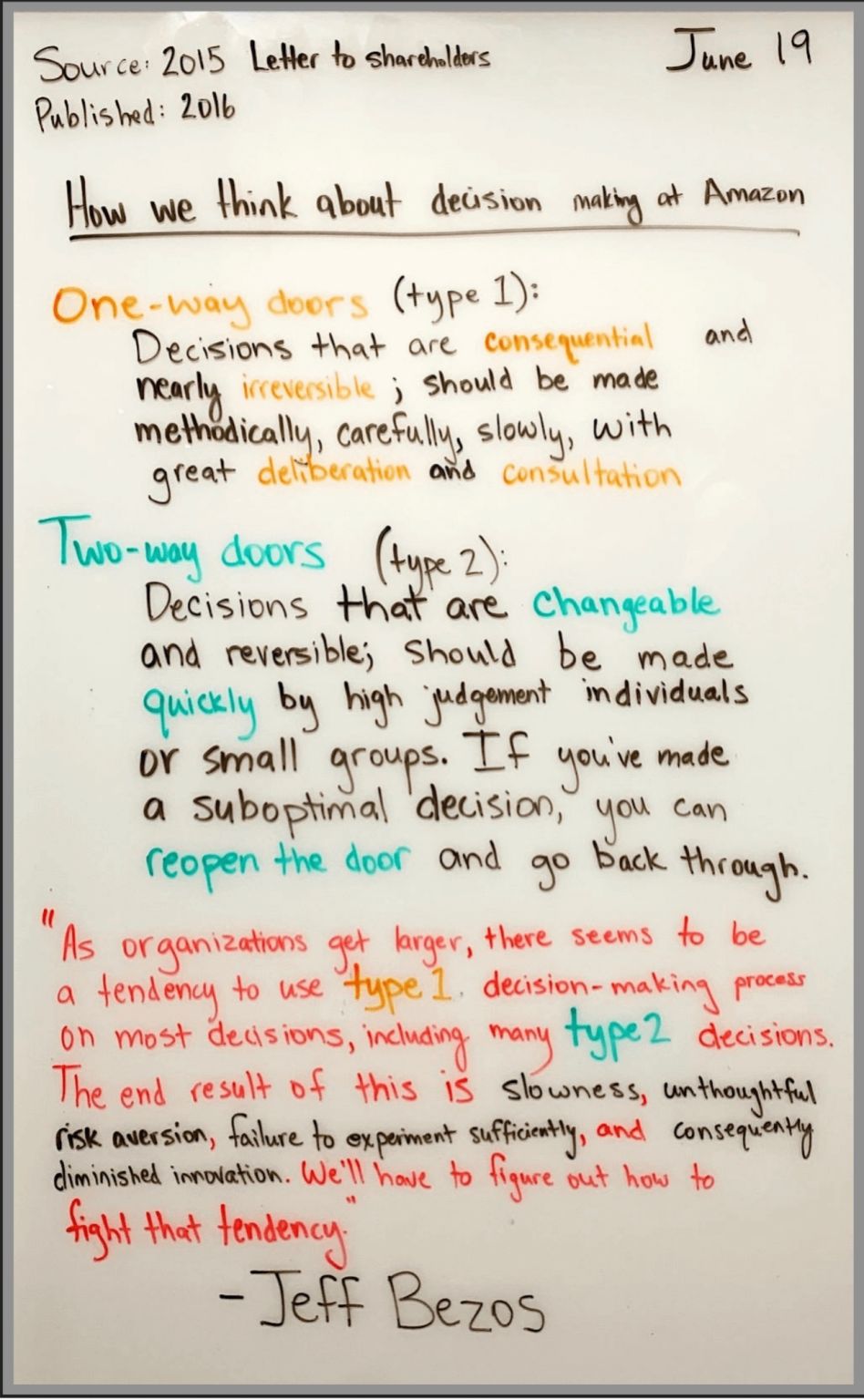
Such a simple but powerful framework by Bezos. Bad leaders spend way too much time on type 2 decisions because: - They can’t distinguish type 1 & 2 decisions - They don’t fully trust their people

Post media
4,247·94 comments·325 reposts
LikeLike
CommentComment
RepostRepost
SendSend
Format: Framework / Mental ModelHook: Observation/Insight Hook

"Such a simple but powerful framework by Bezos." The post is 4 sentences long, credits the source in line one, and earned 4,247 reactions. No original insight required — just clear framing of someone else's idea.

Alex Lieberman
Cofounder @ Morning Brew, Tenex, and storyarb
1y

I run my life like I run my businesses. Sounds ridiculous, but it’s made me a 10x better partner, person, and professional. I built the "Life Map" to be an operating system for connecting the life you want to your daily actions. Full disclosure: I DID NOT INVENT THE LIFE MAP. I took a proven process for running my businesses (called EOS) & and adapted it to my personal life. EOS fundamentally changed the trajectory of Morning Brew. It took us from $3m to $75m in revenue. We went from working in the business to working on the business. Reactive to proactive. Which gave me a crazy thought. What if we apply a similar process to life. A process that helps us plan ahead, focus on the things that matter, and set measurable goals. The crazy thought worked & the Life Map changed my life. There are 8 steps: 1) Core Values 2) Mission 3) Zone of Genius 4) 10-year vision 5) 3-year picture 6) 1-year plan 7) Rocks (90 day goals) 8) Meetings Swipe through the slideshow to go through each step... P.S. I created a Life Map template that you can fill out as you go through this process. If you want it, like this post & comment Life Map & i’ll DM it to you.

1,479·890 comments·14 reposts
LikeLike
CommentComment
RepostRepost
SendSend
Format: Framework / Mental ModelHook: Bold Claim

"I run my life like I run my businesses." He adapts the EOS operating system to personal planning and explicitly says "I DID NOT INVENT THE LIFE MAP" in the post itself. 1,479 reactions plus 890 comments asking for the template.

Why this approach works:

  • No imposter syndrome — he's not claiming to have invented anything
  • Builds relationships — the people he credits often share the post
  • Simplifies content creation — it becomes curation plus perspective, not invention

"But I don't have frameworks to share" — That's exactly the point. He didn't invent the 5 Levels of Work. He didn't create the automation/agent distinction. He found something useful, applied it to his own context, and shared it with credit. You've learned something from someone in the last year that changed how you work. That's your next post.

"But my industry is boring or not tech" — The 5 Levels of Work applies to any team. "Here's what I tell every new employee" works whether you run a SaaS company or a construction firm. The framework is industry-agnostic. Your application is what makes it specific.

What most people do

Spend an hour drafting an 'original insight,' second-guess yourself, delete it.

What Alex does

Find a framework you already use, write 3 paragraphs about how you apply it, credit the source, hit publish.

Every industry has people sharing frameworks in podcasts, books, and tweets. Your job isn't invention — it's translation.

How to implement this

First step

Think of one framework someone taught you that changed how you work. Write 3 paragraphs: what it is, how you use it, credit the source. Post it this week.

Set up your triggers

  • 1When consuming content: Save any useful framework with its source to a "framework bank" (Notion, Apple Notes, whatever you use).
  • 2Before writing: Check your framework bank — you probably have 3-5 posts waiting.
  • 3Monthly: Reach out to one person whose framework you've shared. Let them know. Some will collaborate.

4. Building in Public Without the Cringe

He builds his ventures in public, but he never makes it about "building in public." The difference is subtle but significant.

Consider the contrast:

  • Where most people write "Day 47: We got our first customer! 🎉", Alex writes "I need to hire 100 people in 12 months. Here are the 3 roles."
  • Where most people write "Feeling grateful for this journey", Alex writes "Tenex is a rocket ship. Unlike anything I've seen."
  • Where most people write "Failed today. Learning a lot!", Alex writes "We lost the deal. Then our engineer built an app in 12 hours to win them back."
Alex Lieberman
Cofounder @ Morning Brew, Tenex, and storyarb
3mo

I need to hire 100 people in the next 12 months. Tenex is a rocket ship. Unlike anything i've seen. Our biggest bottleneck is keeping up hiring with the tidal wave of demand we're seeing. Which takes me to the first role I need to fill: Director of People Ops. We need a hands-on, foundational leader who will build and scale the People function as the company grows from ~15 to 100 employees and beyond. Must haves: - 5–10 years in HR/People Ops, ideally across multiple scaling stages (50–250 employees) - Prior experience as a Head of, Director, or Senior Manager of People in a high-growth SaaS or startup. - Pumped to own all aspects of People Ops, Employee Experience, Compliance, and Talent Development That leads me to the other 2 roles we're hiring for, the dynamic duo of client delivery in our business. Next up: AI Strategist. You are the voice of the customer. If a customer success savant & world-class PM had a baby, it'd look like our AI Strategist. The job: Translate client goals into reality by uncovering bottlenecks and inefficiencies, aligning stakeholders, and executing change‑management and software‑implementation plans that unlock AI‑driven leverage. Must haves: deeply technical + previous experience as a technical consultant, PM, sales engineer, or similar role. Last up, is their technical partner: the Forward Deployed Engineer. Must-haves: elite engineering chops, AI-first mindset, relentless curiosity, team multiplier, client-facing. Oh...one more thing...your comp range is $250,000-$800,000. Why? It's uncapped (based on storypoint output). We pay you like a salesperson. Links to all jobs here: https://lnkd.in/edXZjyc8

873·176 comments·70 reposts
LikeLike
CommentComment
RepostRepost
SendSend
Format: AnnouncementHook: Number/Stat Hook

This isn't a humble update — it's a bold business statement that doubles as a job post. The urgency is real, the comp ranges are specific, and it earned 873 reactions.

Alex Lieberman
Cofounder @ Morning Brew, Tenex, and storyarb
7mo

Pretty crazy sales story. Last week, a huge fitness influencer reached out to our team to help develop a mobile app they’re looking to launch. Team was pumped about it. Massive name. Great idea. Clear way for AI to scale a 1:1 experience. Pitch went well. Influencer said it was between us and another product/engineering partner. That they’d get back to us soon. 24 hours pass and we get a text: “We’re going with the other guys.” Well, that sucks. If this was 5 years ago, things would go one of two ways: 1) We’d pester the lead to get them back on the call, information gather and try to see if the door is actually closed. 2) We’d call it closed lost and move on with our lives. But in an age of AI, things—especially sales—looks completely different. One of our engineers at Tenex heard that we lost the deal, and took it upon himself to win them back. Within 12 hours of getting the bad news he: - Built and deployed a functioning app that could be downloaded and used in TestFlight - Recorded a loom walking him through the app, and where we could build upon the MVP if we work together 12 hours after that, I get another text from the influencer: “Watching this now. Impressed.” He proceeds to tell us that the door isn’t closed and he wants to get on another call to see how we can make it work. We had the call yesterday, and while nothing is signed, things are looking very good. Absolutely savage move by our engineer, and pretty cool example of speed-to-value in a post-AI world.

678·103 comments·5 reposts
LikeLike
CommentComment
RepostRepost
SendSend
Format: Case Study / Success StoryHook: Client/Case Study Story

The structure here is tension, unexpected twist, resolution. They lost the deal, an engineer took initiative, the door reopened. It earned 678 reactions because it's a story, not a status update.

Alex Lieberman
Cofounder @ Morning Brew, Tenex, and storyarb
2mo

I was interviewing someone from a Big 4 consultancy today. When I asked them “why are you interested in jumping ship to join a startup?” Their response was “I want to live on the frontier of AI and I can’t do that at a place where most tools aren’t approved.” They went on to list every AI technology that they have to play around with on their personal computer because work won’t allow it: - Cursor - Claude Code - Replit - ChatGPT This is becoming an accelerating trend for candidates applying to Tenex. A fear of being left behind as a massive class divide is created between the haves and have nots of a post-AI world. And if I was a big company CEO I’d be shaking in my boots about a serious talent brain drain if gated access to the “fire” of our generation continues.

567·62 comments·8 reposts
LikeLike
CommentComment
RepostRepost
SendSend
Format: Mindset ShiftHook: Observation/Insight Hook

An interview story about Big 4 consultants wanting to "live on the frontier of AI." His company is the implied answer, but it's never pitched directly. It earned 567 reactions.

What he actually does breaks into four patterns:

  1. Hiring as content — real job descriptions with comp ranges and urgency
  2. Milestones as news — not celebrations, but stories with context
  3. Strategy as thought leadership — "Here's how we use Notion Agents" reads as insight, even when sponsored
  4. Wins as stories — the engineer building an app in 12 hours makes the company look good through narrative, not bragging

"But I don't have interesting stories like his" — His engineer-builds-app-in-12-hours story is really just "we lost a deal, then someone on our team did something unexpected to win it back." That happens in every company. The story isn't inherently interesting — the framing is.

What most people do

Progress updates that read like a diary. 'We hit X customers!' with no context. Celebrating yourself instead of creating value.

What Alex does

Makes business updates feel like insider intel. Turns hiring into content. Uses milestones as excuses to tell bigger stories.

Your business has drama. Someone saved a deal. Someone quit and taught you something. A customer surprised you. Those are stories — not when you share the emotion, but when you share the structure.

How to implement this

First step

Write about one thing that went wrong at work and how it got fixed. Structure: situation → complication → resolution. Post it this week.

Set up your triggers

  • 1After meetings: Ask yourself "Is there a story here?" — difficult conversations, surprising wins, broken processes all have potential.
  • 2When something happens: Capture the moment in 2-3 bullet points before you forget. Raw notes become posts.
  • 3Weekly: Review your captured moments. Pick one and write it as situation → complication → resolution.

5. Selling Without Selling

He published 71 sponsored or partner posts in 2025 alone, and none of them feel like ads. His top post of the last six months is literally marked #ad — and it outperformed everything else.

Alex Lieberman
Cofounder @ Morning Brew, Tenex, and storyarb
3mo

#ad My business 10x’d in one year. And it was one of the most challenging professional periods of my life.   You’ll understand why in a second, but I wish that I had Intuit Enterprise Suite (who I’ve partnered with for this video) acting as the backbone of our business during this period of hypergrowth. In 2019, Morning Brew grew from 100,000 subscribers to 1 million. And on the back of that growth, revenue jumped from $20 million ultimately to $70 million and our team went from 50 to 300 in just 24 months. Super exciting, right? Also incredibly stressful. During this period of hypergrowth things started to break. We went from onboarding 1 person a month to 10 people per month. Not only did we have to completely rebuild our onboarding & payroll processes from the ground up, but we also had to offer better benefits than our company’s dental policy being a bag of flossers. We also had to start thinking really hard about our finances. No more spreadsheets, no more passively following up on payments we were due. We were managing many millions of dollars of operating expenses a month and had 7-figures worth of account receivables at any given time. And lastly, I had to completely change how I spent my time as the CEO of an 8-figure business. I had to go from working in the business to working on the business. And I had to spend my time on things like goal-setting and managing our execs versus taking sales calls with advertisers. Reinventing myself as CEO was a full-time job in itself, which is why having something like Intuit Enterprise Suite to help navigate our growth across the business would have been invaluable to free up my time. From simplifying enterprise payroll & HR to accelerating AR and retaining top performers with benefits, Intuit enterprise Suite truly offers a rock solid foundation for growing an 8-figure business. It's the AI-native ERP that scales with your business. https://intuit.me/48I2v3K Intuit Enterprise Suite #intuitpartner #IntuitEnterpriseSuite

3,569·282 comments·71 reposts
LikeLike
CommentComment
RepostRepost
SendSend
Format: Case Study / Success StoryHook: Number/Stat Hook

This earned 3,569 reactions, making it his highest performer. It's technically an advertisement, but it reads as a story about Morning Brew's hypergrowth and what broke along the way. The product is mentioned as something that would have helped — not as something you should buy.

Alex Lieberman
Cofounder @ Morning Brew, Tenex, and storyarb
6mo

Notion just announced Notion Agent.   I don’t think people realize how big of a deal this is. By attaching a knowledge base with personalized agents, this will be the closest thing yet to an army of 24/7, deeply informed employees. I made a list of 10 different ways I plan to test & leverage agents across my companies’ over the coming weeks: 1) State of the business update: prepare & send a weekly company newsletter that compiles updates from sales database + hiring database + Slack threads + meeting notes 2) Leadership meeting scorecard: ahead of weekly leadership meetings, fill in a scorecard of our core KPIs: sales pipeline, NPS, storypoints, hiring pipeline, content performance to be reviewed by exec team 3) Seller agent: after a meeting with a prospect, Notion agent would update leads status in sales database and write a follow-up email in my style, based on notes from call recording 4) Long-term memory: “Remember our OKR format; when I say ‘spin up an OKR draft for Team X’, reuse that structure and last cycle’s KRs.” 5) Client meeting prep: Pull notes/emails/PRs/slacks and put together a prep doc for customer success team member to get them up to speed for weekly call with a client 6) Build from scratch: Create a complete ‘Launch Hub’ (pages + DBs + relations) for a new product we want to launch in the business that will require PRD, timeline, marketing plan, and sprint board. 7) Meeting copywriter: train the agent on my recent social content, turn my meeting recordings into social posts, and send me a weekly page with drafts of my meeting transcripts turned social posts. 8) Knowledge base researcher: anytime we close a new client, have the agent put together a brief that includes client research, notes from sales calls, and any relevant learnings/playbooks used with other clients in the same industry. 9) Strategic finance agent: reconcile actual financials vs budget; produce commentary on Rev + COGS variance; create a report on what drove variance as well as thoughts on how this changes next-month forecast. 10) Onboarding OS: have agent spin up a hub that includes week 1 calendar, company pre-reads, and company handbook. I feel like companies will be at a huge disadvantage if they don’t have an internal workspace supercharged with agents (like Notion). Do yourself a favor & check it out here: https://ntn.so/AlexAgent #NotionPartner #MakewithNotion

885·97 comments·30 reposts
LikeLike
CommentComment
RepostRepost
SendSend
Format: Tool / TemplateHook: Bold Claim

At 885 reactions, this #NotionPartner post works because it's about what he plans to build, not about Notion's features. The product is context for his strategy, not the point of the post.

What most people do

Feature-led: 'Here's a tool I've been using...' Describes problems he's supposed to have. Treats sponsorship as an obligation to mention a product.

What Alex does

Story-led: 'My business 10x'd and here's what broke...' Describes problems he actually had. Treats sponsorship as an excuse to tell a better story.

His CTA pattern: Almost never "DM me" or "Buy this." Instead: "Shoot me an email at [email protected]" or just a simple link. Soft, not aggressive, assumes you'll come if interested.

"But I don't want to sound salesy" — His top-performing post is literally marked #ad and earned 40x his median engagement. It worked because it's not a product pitch. It's a story about growing Morning Brew from 100k to 1M subscribers and what broke during that growth. Story first, product as footnote.

Every business has stories that happen to involve products. Your customer success story is content. Your feature launch is content — if you lead with the problem it solves, not the feature itself.

How to implement this

First step

Write about a problem you solved for yourself or a customer. Mention the tool that helped in one sentence near the end. Ratio: 90% story, 10% product.

Set up your triggers

  • 1Before announcements: Ask "What's the story behind this?" The backstory is always more interesting than the news.
  • 2When promoting: Lead with the problem you solved, not the product features. Product is context, not the point.
  • 3For sponsors: They pay for your stories, not ad copy. Your voice, their context.

6. The Missing Funnel (And Why It Works)

Most LinkedIn advice talks about TOF/MOF/BOF funnels — top-of-funnel awareness, mid-funnel engagement, bottom-of-funnel conversion. Alex doesn't really have one. At least not the typical kind.

What he has instead:

  • LinkedIn → Podcast — Most posts don't include CTAs. When they do, it's usually "listen to today's pod" or a link to a longer breakdown.
  • LinkedIn → Company awareness — Tenex job posts work as content. Storyarb gets positioned through stories. No pitch required.
  • LinkedIn → Email (rarely) — He occasionally drives to Morning Brew or his newsletter, but it's not systematic.

Why no hard funnel works for him: He's not selling a course, a community, or coaching. His businesses (Tenex, storyarb) are high-trust, high-ticket services. Those don't convert from LinkedIn DMs. They convert from "I've seen this guy's thinking for 6 months, I trust him, let me reach out."

What this means for you: If you're selling low-ticket or info products, you probably need a harder CTA strategy than Alex runs. But if you're selling services or building trust-based business, his approach — consistently showing up, no pitch, let people come to you — is worth stealing.

"But I need leads" — Fair. His soft CTA approach works because his products benefit from long sales cycles. If you need shorter cycles, add one clear CTA per week while keeping the other posts pitch-free. Don't make every post a funnel push.

7. The Vulnerability Play (Without the Cringe)

Personal stories are his highest performers, but they're never what you'd call "vulnerability porn." There's always structure, always a lesson, and often humor.

Alex Lieberman
Cofounder @ Morning Brew, Tenex, and storyarb
1mo

Just hit 200,000 followers, pretty pretty crazy. I'm a 32-year overnight success, so thought I'd re-introduce myself & help you understand the man behind the content. My life is a collection of four chapters & many inflection points. Chapter 1: Privilege & pain - My teen-to-early adult life was a tail of two realities. Privilege & pain. - I was privileged to grow up in a upper-middle class family of four with incredible parents who loved me unconditionally & a sister I call a best friend. - I also experienced real pain. - I was bullied from 4th grade until 12th. I felt unworthy, unattractive, and unintelligent. - I went to the University of Michigan, yearning for a fresh start. - I found that. Community. Close friends. School spirit. It was magical until... - A week before my junior year. I wake up to 20 phone calls from family. It was about my dad. He suffered a major stroke. He passed 24 hours later. 46-years-old. Completely healthy. No warning. Chapter 2: The Brew - I became an accidental entrepreneur. - I grew up in a Wall Street family, went to college for business, and started my career as a Bond Trader at Morgan Stanley. - Market Corner, a PDF newsletter I started as a Senior in college turns into Morning Brew. - Austin Rief & I quite our jobs & build the business together for several years, a journey peppered with pinch me moments. - The Brew became the most engaging business media company in the world with 341m impressions, dozens of franchises, and the largest daily business newsletter in the U.S. - We sold the business to Axel Springer, growing revenue to $70m & 300+ employees. Chapter 3: Loss of identity - I should have been completely fulfilled & happy. - Set financially. Very happily married to my best friend. Complete freedom for how I spend my time. - But I felt lost. Very lost. My identity had been so inextricably linked to the Brew for a decade, and without it, I was like a lost puppy. - Without a clear north star, I wasn't growing. And when I don't grow, I feel like I'm atrophying. - I ended up launching a startup playground, where I incubated various business ideas from the insane (i.e a plunger throwing game) to the intelligent (i.e. storyarb and Tenex). Chapter 4: New north star - The path to parenthood wasn't all smooth sailing. My wife experienced a third trimester pregnancy loss, which shook us to our core & had us yearning for a child more than ever. - Arman Hezarkhani and I cofound Tenex, McKinsey for AI, which takes off like a rocket ship immediately. I've never seen anything like it. - My wife and I welcome Brooke Spencer (named after my dad, Bruce Spencer) to our lives. Our hearts are inexplicably full. - My new mission is simple: prove that I can be an A+ family man & an A+ entrepreneur, in that order. I am so grateful for my life and the part that creating content & building audience on Linkedin has played in shaping it. Happy to answer any questions you have about my story if helpful :)

918·89 comments·3 reposts
LikeLike
CommentComment
RepostRepost
SendSend
Format: Personal StoryHook: Number/Stat Hook

At 918 reactions, this works because of its clear structure — his life arc in four chapters: Privilege & pain, The Brew, Loss of identity, New north star. He's not complaining. He's reflecting.
Alex Lieberman
Cofounder @ Morning Brew, Tenex, and storyarb
1mo

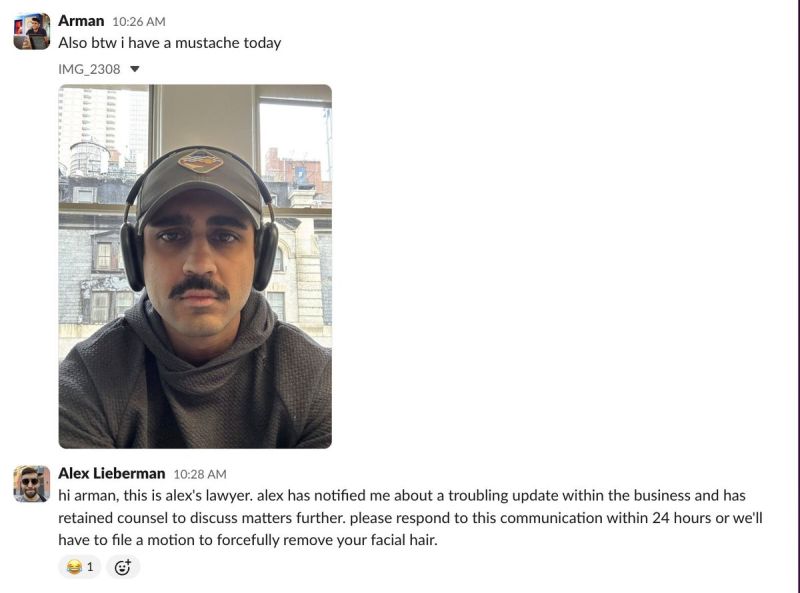
my relationship with my cofounder is in shambles. everything was fine until today. had no other choice but to get lawyers involved...

Post media
783·71 comments·1 reposts
LikeLike
CommentComment
RepostRepost
SendSend
Format: Personal StoryHook: Personal Confession

This earned 783 reactions as a bait-and-switch joke. The opening sounds like disaster, then pivots to humor. It uses the pattern of vulnerability but subverts the expectation.

Alex Lieberman
Cofounder @ Morning Brew, Tenex, and storyarb
1mo

I have cold DM'd a specific person on Linkedin every 3 months for 9 years straight trying to recruit them to work with me. Just last week, for the first time, they said they were interested. You & I are not built the same.

762·194 comments·3 reposts
LikeLike
CommentComment
RepostRepost
SendSend
Format: Personal StoryHook: Bold Claim

A persistence story at 762 reactions. The bold kicker — "You & I are not built the same" — turns personal experience into a challenge.

The pattern across these posts:

  • Personal doesn't mean emotional dumping
  • Posts usually end with a lesson or pivot to business
  • Humor is often used to balance weight
  • There's always structure: setup, conflict, resolution
What most people do

'I'm struggling and wanted to share.' Point is the emotion. Asks for sympathy. Either avoids personal content or overshares uncomfortably.

What Alex does

'Here's what I learned from struggling.' Point is the insight. Earns respect. Personal stories have structure and end with relevance to business.

Personal content doesn't mean confessing. It means voice. Your work life has moments with tension and resolution. The job is framing them as stories with lessons.

How to implement this

First step

Think of a moment from your work life with tension — a decision, conflict, failure, or surprise. Write it as: what happened → why it was hard → what you learned.

Set up your triggers

  • 1Build your list: Write down "milestone moments" from your career (first hire, first customer loss, pivot, breakthrough). Each is potential content.
  • 2Ratio rule: About 1 in 5 posts can be personal. Never post personal content back-to-back.
  • 3Before posting: Ask "Does this end with an insight?" If it's just emotion, add the lesson.

What You Can Steal This Week

Priority 1: The Content Rotation (do this first)

Write down five buckets: Industry take, Framework, Company update, Personal story, Hot take. Stick them on your monitor or in a note. Before your next post, pick a bucket you haven't used recently. That's your topic. Stop staring at blank pages — you're just opening a different drawer.

Priority 2: The Bold Claim Rewrite

Take whatever post you're working on. Rewrite the first sentence as a statement, not a question. "Most people get X wrong." "The average [role] cannot..." If you feel nervous publishing it, you're probably on the right track. Bold claims get engagement because they create stakes.

Priority 3: The Framework Theft

Think of one idea from a book, podcast, or conversation that changed how you work. Write 3 paragraphs: what the framework is, how you use it, credit the source. That's a post. You didn't have to invent anything — you just had to apply someone else's thinking.

If you only do one thing: Write your 5 buckets down today. Tomorrow morning, pick a bucket and write. The system starts with knowing what drawer to open.

The Honest Caveats

Some things to keep in mind:

  • Volume is the real story — 1,857 posts in three years is what built the audience. The Morning Brew exit gave him credibility, but consistent volume is what made it compound.
  • His volume is likely team-supported — Most founders can't match 1.6/day. Start with 3x/week and build from there.
  • Tenex timing is unusually good — AI services in 2025 is a hot market. His business content benefits from riding a wave.
  • Milestone posts like having a baby or hitting 200k followers aren't repeatable tactics. Don't benchmark against those spikes.

But the patterns — rotation between content pillars, bold claim hooks, borrowed frameworks with credit, stories over announcements, soft CTAs — those transfer regardless of your starting point. They don't require his advantages. They require consistency.

His Top Recent Performers

The posts that worked best in the last 9 months. Swipe to explore.

Alex Lieberman
Cofounder @ Morning Brew, Tenex, and storyarb
3mo

#ad My business 10x’d in one year. And it was one of the most challenging professional periods of my life.   You’ll understand why in a second, but I wish that I had Intuit Enterprise Suite (who I’ve partnered with for this video) acting as the backbone of our business during this period of hypergrowth. In 2019, Morning Brew grew from 100,000 subscribers to 1 million. And on the back of that growth, revenue jumped from $20 million ultimately to $70 million and our team went from 50 to 300 in just 24 months. Super exciting, right? Also incredibly stressful. During this period of hypergrowth things started to break. We went from onboarding 1 person a month to 10 people per month. Not only did we have to completely rebuild our onboarding & payroll processes from the ground up, but we also had to offer better benefits than our company’s dental policy being a bag of flossers. We also had to start thinking really hard about our finances. No more spreadsheets, no more passively following up on payments we were due. We were managing many millions of dollars of operating expenses a month and had 7-figures worth of account receivables at any given time. And lastly, I had to completely change how I spent my time as the CEO of an 8-figure business. I had to go from working in the business to working on the business. And I had to spend my time on things like goal-setting and managing our execs versus taking sales calls with advertisers. Reinventing myself as CEO was a full-time job in itself, which is why having something like Intuit Enterprise Suite to help navigate our growth across the business would have been invaluable to free up my time. From simplifying enterprise payroll & HR to accelerating AR and retaining top performers with benefits, Intuit enterprise Suite truly offers a rock solid foundation for growing an 8-figure business. It's the AI-native ERP that scales with your business. https://intuit.me/48I2v3K Intuit Enterprise Suite #intuitpartner #IntuitEnterpriseSuite

3,569·282 comments·71 reposts
LikeLike
CommentComment
RepostRepost
SendSend
Format: Case Study / Success StoryHook: Number/Stat Hook
Alex Lieberman
Cofounder @ Morning Brew, Tenex, and storyarb
5mo

I stole this idea and now use it with every single employee. It’s the best illustration I’ve seen of teaching someone to be high agency. It says there are 5 levels of work: Level 1: “There is a problem.” Level 2: “There is a problem, and I’ve found some causes.” Level 3: “Here’s the problem, here are some possible causes, and here are some possible solutions.” Level 4: “Here’s the problem, here’s what I think caused it, here are some possible solutions, and here’s the one I think we should pick.” Level 5: “I identified a problem, figured out what caused it, researched how to fix it, and I fixed it. Just wanted to keep you in the loop.” Using this framework, here’s what I say to every new employee… You will live at Level 4 from Day 1 and as we build trust you will rise to Level 5. Being high agency doesn’t just mean tackling problems in this way. It means your entire way of working should be oriented to being a Level 4+ employee. Plz feel free to steal it as well. And ty Steph Smith for the framework!

Post media
1,529·125 comments·85 reposts
LikeLike
CommentComment
RepostRepost
SendSend
Format: Framework / Mental ModelHook: Bold Claim
Alex Lieberman
Cofounder @ Morning Brew, Tenex, and storyarb
5mo

The average CEO cannot tell you the difference between an automation and an AI agent. This breakdown (h/t Wade Foster) makes it glaringly obvious. An automation is anything that requires no-trust decision making (if this, then that). An AI agent is anything that requires some-trust decision making. The most powerful workflows that I’m seeing businesses use today are neither pure automations nor pure agents. They’re agentic workflows. Agentic workflows get the leverage of AI (read: intelligent decision making) that deterministic software never offered. But they also have the predictability of automations, where the cost of error is too high. Knowledge work will continue to get pushed further right on this spectrum as the technology improves, but today living in the middle is often the sweet spot.

Post media
969·119 comments·38 reposts
LikeLike
CommentComment
RepostRepost
SendSend
Format: Framework / Mental ModelHook: Bold Claim
Alex Lieberman
Cofounder @ Morning Brew, Tenex, and storyarb
1mo

my relationship with my cofounder is in shambles. everything was fine until today. had no other choice but to get lawyers involved...

Post media
783·71 comments·1 reposts
LikeLike
CommentComment
RepostRepost
SendSend
Format: Personal StoryHook: Personal Confession
Alex Lieberman
Cofounder @ Morning Brew, Tenex, and storyarb
2mo

I'm floored that the vast minority of people I interview send thank you emails. Like 1-2 out of 10. Back when I was interviewing for jobs, it was one of the biggest faux pas to not send a thank you email. Like instant disqualification. Has conventional etiquette just changed? Is it just a generational thing? Very curious.

1,086·1,026 comments·9 reposts
LikeLike
CommentComment
RepostRepost
SendSend
Format: Engagement/QuestionHook: Observation/Insight Hook
Alex Lieberman
Cofounder @ Morning Brew, Tenex, and storyarb
6mo

I’m happy to share that I’m starting a new position as Co-founder and Managing Partner at Tenex! Our mission is to help your business reach its potential & end up on the right side of history, post-AI. Here's what we believe: 1) AI is a technological supercycle that will completely change the way in which companies do business & people do work over the next 10 years. 2) There are three types of relationships businesses will have with AI: AI-absent, AI-integrated, and AI-first. 3) The only way to build a long-term successful business is by embracing the AI wave & getting as close to AI-first as possible. 4) Most companies won’t have the knowledge or bandwidth in-house to build custom AI solutions that integrate seamlessly with their existing systems, processes, and people. Here's how we execute: 1) AI Engineering: We provide high-velocity engineering-as-a service, without sacrificing quality. 2) AI Transformation: We architect your enterprise AI strategy and execute it across three pillars: product, process, and people transformation. Whether you want high-velocity product & engineering pods accelerated by AI or support setting & executing your company's AI strategy, we'll help you win the next decade. Shoot me an email at [email protected] or head to tenex.co to learn more.

933·151 comments·1 reposts
LikeLike
CommentComment
RepostRepost
SendSend
Format: AnnouncementHook: Bold Claim
Alex Lieberman
Cofounder @ Morning Brew, Tenex, and storyarb
1mo

Just hit 200,000 followers, pretty pretty crazy. I'm a 32-year overnight success, so thought I'd re-introduce myself & help you understand the man behind the content. My life is a collection of four chapters & many inflection points. Chapter 1: Privilege & pain - My teen-to-early adult life was a tail of two realities. Privilege & pain. - I was privileged to grow up in a upper-middle class family of four with incredible parents who loved me unconditionally & a sister I call a best friend. - I also experienced real pain. - I was bullied from 4th grade until 12th. I felt unworthy, unattractive, and unintelligent. - I went to the University of Michigan, yearning for a fresh start. - I found that. Community. Close friends. School spirit. It was magical until... - A week before my junior year. I wake up to 20 phone calls from family. It was about my dad. He suffered a major stroke. He passed 24 hours later. 46-years-old. Completely healthy. No warning. Chapter 2: The Brew - I became an accidental entrepreneur. - I grew up in a Wall Street family, went to college for business, and started my career as a Bond Trader at Morgan Stanley. - Market Corner, a PDF newsletter I started as a Senior in college turns into Morning Brew. - Austin Rief & I quite our jobs & build the business together for several years, a journey peppered with pinch me moments. - The Brew became the most engaging business media company in the world with 341m impressions, dozens of franchises, and the largest daily business newsletter in the U.S. - We sold the business to Axel Springer, growing revenue to $70m & 300+ employees. Chapter 3: Loss of identity - I should have been completely fulfilled & happy. - Set financially. Very happily married to my best friend. Complete freedom for how I spend my time. - But I felt lost. Very lost. My identity had been so inextricably linked to the Brew for a decade, and without it, I was like a lost puppy. - Without a clear north star, I wasn't growing. And when I don't grow, I feel like I'm atrophying. - I ended up launching a startup playground, where I incubated various business ideas from the insane (i.e a plunger throwing game) to the intelligent (i.e. storyarb and Tenex). Chapter 4: New north star - The path to parenthood wasn't all smooth sailing. My wife experienced a third trimester pregnancy loss, which shook us to our core & had us yearning for a child more than ever. - Arman Hezarkhani and I cofound Tenex, McKinsey for AI, which takes off like a rocket ship immediately. I've never seen anything like it. - My wife and I welcome Brooke Spencer (named after my dad, Bruce Spencer) to our lives. Our hearts are inexplicably full. - My new mission is simple: prove that I can be an A+ family man & an A+ entrepreneur, in that order. I am so grateful for my life and the part that creating content & building audience on Linkedin has played in shaping it. Happy to answer any questions you have about my story if helpful :)

918·89 comments·3 reposts
LikeLike
CommentComment
RepostRepost
SendSend
Format: Personal StoryHook: Number/Stat Hook
Alex Lieberman
Cofounder @ Morning Brew, Tenex, and storyarb
6mo

Notion just announced Notion Agent.   I don’t think people realize how big of a deal this is. By attaching a knowledge base with personalized agents, this will be the closest thing yet to an army of 24/7, deeply informed employees. I made a list of 10 different ways I plan to test & leverage agents across my companies’ over the coming weeks: 1) State of the business update: prepare & send a weekly company newsletter that compiles updates from sales database + hiring database + Slack threads + meeting notes 2) Leadership meeting scorecard: ahead of weekly leadership meetings, fill in a scorecard of our core KPIs: sales pipeline, NPS, storypoints, hiring pipeline, content performance to be reviewed by exec team 3) Seller agent: after a meeting with a prospect, Notion agent would update leads status in sales database and write a follow-up email in my style, based on notes from call recording 4) Long-term memory: “Remember our OKR format; when I say ‘spin up an OKR draft for Team X’, reuse that structure and last cycle’s KRs.” 5) Client meeting prep: Pull notes/emails/PRs/slacks and put together a prep doc for customer success team member to get them up to speed for weekly call with a client 6) Build from scratch: Create a complete ‘Launch Hub’ (pages + DBs + relations) for a new product we want to launch in the business that will require PRD, timeline, marketing plan, and sprint board. 7) Meeting copywriter: train the agent on my recent social content, turn my meeting recordings into social posts, and send me a weekly page with drafts of my meeting transcripts turned social posts. 8) Knowledge base researcher: anytime we close a new client, have the agent put together a brief that includes client research, notes from sales calls, and any relevant learnings/playbooks used with other clients in the same industry. 9) Strategic finance agent: reconcile actual financials vs budget; produce commentary on Rev + COGS variance; create a report on what drove variance as well as thoughts on how this changes next-month forecast. 10) Onboarding OS: have agent spin up a hub that includes week 1 calendar, company pre-reads, and company handbook. I feel like companies will be at a huge disadvantage if they don’t have an internal workspace supercharged with agents (like Notion). Do yourself a favor & check it out here: https://ntn.so/AlexAgent #NotionPartner #MakewithNotion

885·97 comments·30 reposts
LikeLike
CommentComment
RepostRepost
SendSend
Format: Tool / TemplateHook: Bold Claim
Alex Lieberman
Cofounder @ Morning Brew, Tenex, and storyarb
3mo

I need to hire 100 people in the next 12 months. Tenex is a rocket ship. Unlike anything i've seen. Our biggest bottleneck is keeping up hiring with the tidal wave of demand we're seeing. Which takes me to the first role I need to fill: Director of People Ops. We need a hands-on, foundational leader who will build and scale the People function as the company grows from ~15 to 100 employees and beyond. Must haves: - 5–10 years in HR/People Ops, ideally across multiple scaling stages (50–250 employees) - Prior experience as a Head of, Director, or Senior Manager of People in a high-growth SaaS or startup. - Pumped to own all aspects of People Ops, Employee Experience, Compliance, and Talent Development That leads me to the other 2 roles we're hiring for, the dynamic duo of client delivery in our business. Next up: AI Strategist. You are the voice of the customer. If a customer success savant & world-class PM had a baby, it'd look like our AI Strategist. The job: Translate client goals into reality by uncovering bottlenecks and inefficiencies, aligning stakeholders, and executing change‑management and software‑implementation plans that unlock AI‑driven leverage. Must haves: deeply technical + previous experience as a technical consultant, PM, sales engineer, or similar role. Last up, is their technical partner: the Forward Deployed Engineer. Must-haves: elite engineering chops, AI-first mindset, relentless curiosity, team multiplier, client-facing. Oh...one more thing...your comp range is $250,000-$800,000. Why? It's uncapped (based on storypoint output). We pay you like a salesperson. Links to all jobs here: https://lnkd.in/edXZjyc8

873·176 comments·70 reposts
LikeLike
CommentComment
RepostRepost
SendSend
Format: AnnouncementHook: Number/Stat Hook
Alex Lieberman
Cofounder @ Morning Brew, Tenex, and storyarb
9mo

A 21-year-old engineer just looked me dead in the eyes and goes: “With me, you get a dog. I spent the first 10 years of my life doing manual labor. Most people don’t know hard work. I know hard work. If you make me a million dollars, I’ll make you a billion dollars.” Instant. Hire.

811·218 comments·8 reposts
LikeLike
CommentComment
RepostRepost
SendSend
Format: Mindset ShiftHook: Quote Hook
Alex Lieberman
Cofounder @ Morning Brew, Tenex, and storyarb
1mo

I have cold DM'd a specific person on Linkedin every 3 months for 9 years straight trying to recruit them to work with me. Just last week, for the first time, they said they were interested. You & I are not built the same.

762·194 comments·3 reposts
LikeLike
CommentComment
RepostRepost
SendSend
Format: Personal StoryHook: Bold Claim
Alex Lieberman
Cofounder @ Morning Brew, Tenex, and storyarb
1mo

This guy made 40 Facebook ads, 100 landing pages, booked himself on 4 podcasts, and wrote 3 guest blog posts. In a single day. People called him a fraud. There was literally a Polymarket bet on whether he's a con artist. So i asked him to prove it to me. And he did. Here's Cody Schneider's actual system for AI-enabled paid marketing: 1) He uses Perplexity to search Reddit for his ICP's actual pain points in their own words. Not what he thinks they care about, what they've literally said online. 2) He feeds those pain points into Claude, which generates 40 ad variations, titles, supporting copy, and the actual creative using React components exported as PNGs via a library called HTML-to-canvas. 3) He tests all 40 variations in a CPC campaign on Meta. $100 over 3 days. Cheapest cost-per-click wins. 4) Winners get matched landing pages. He uses an open-source CMS called Strapi connected to Claude Code via API, so he bulk-generates a landing page for every winning ad angle. Same headline on the ad and the page = higher conversion. 5) Once he finds a winning concept, he scales it — AI avatar UGC via HeyGen, upgraded with V3, and only brings in a human creator if the AI version plateaus. The whole thing runs on Claude Code + APIs + a .env file with all his keys. No engineering team. Just him on multiple desktops with multiple Claude agents running simultaneously. His best line: "you're not just hiring me anymore. you're hiring me and the 30 agents behind me and all the personal software i've built."

692·149 comments·17 reposts
LikeLike
CommentComment
RepostRepost
SendSend
Format: Educational/How-toHook: Bold Claim

Steal This Strategy

Steal This Strategy

Build your own version of Alex's system in 5 minutes

The full strategy, ready to drop into your AI. Open in ChatGPT or Claude — it'll ask you 5 questions and hand you a personalised plan you can post from this week.

The Playbook

## THE CORE BET LinkedIn as distribution infrastructure for ventures — not a separate "personal brand" exercise. Volume compounds, consistency wins, every post serves the larger ecosystem. ## CONTENT SYSTEM **Format:** 75% text, 18% image, 5% video (shifted from video-heavy in 2023) **Cadence:** ~1.6 posts/day (likely team-supported) **Rotation:** 5 content pillars, never same bucket twice in a row **The 5 Pillars:** 1. Industry takes — AI/business observations that position as thinker 2. Borrowed frameworks — credited to source, applied to his context 3. Company updates — hiring, milestones, strategy as content 4. Personal stories — structured with lessons, not emotional dumping 5. Lists/hot takes — engagement drivers with strong opinions ## HOOK STYLE Bold claim dominant. Opens with confident statements, not questions. - "The average CEO cannot tell you..." - "I stole this idea..." - "You have questionable integrity if..." Posts with bold claims average 170 reactions vs 88 median. ## CTA PATTERN Soft and assumes interest. Most posts have no CTA. When present: "Shoot me an email at..." or simple link. Never "DM me" or "Buy this." Promotes through stories — top post (3,569 reactions) is marked #ad but reads as Morning Brew growth story. ## TRANSFERABLE TACTICS 1. **Content rotation** — Build 5 buckets, rotate systematically, never run dry 2. **Framework theft** — Find useful frameworks, apply to your context, credit openly 3. **Story-led everything** — Hiring, sponsored, updates all follow narrative structure 4. **Bold claim hooks** — Lead with observations, not questions 5. **Soft selling** — Story first, product as footnote ## WHAT TOOK TIME TO COMPOUND His voice. Early 2023 posts were scrappier, shorter, experimental. By 2025: longer text posts, confident frameworks, stable format. The shift from video to text happened gradually as he found what worked.

Frequently Asked Questions

Unknown, but likely has team support given 1.6 posts/day volume. The voice and perspective remain consistent, suggesting if he has help, they match his style closely. The takeaway: systems and support matter more than doing it all yourself.
Plenty do. His median is 88 reactions — meaning half his posts get less than that. He doesn't delete underperformers or course-correct after one bad week. Volume and consistency matter more than any single post.
The buckets and bold claims are industry-agnostic. A construction company founder can post: industry take (what's wrong with bidding), framework (how I run job sites), company update (just hired 10 people). Same system, different content.
His early 2023 posts had a median of 76 reactions. The compounding happened over years, not weeks. Expect 6+ months of consistent posting before LinkedIn feels like it's 'working.' The system is designed for patience.
Not unless you have support. 1.6 posts/day is likely team-enabled. Start with 3x/week using the bucket rotation. Consistency at a sustainable pace beats burnout volume.
Most of his posts don't reference Morning Brew at all. They're frameworks, hot takes, and observations anyone could make. The exit gave him initial credibility; the content earned the audience.

Now apply it

Ask your LinkedIn data what to post next

A LinkedIn content strategist inside your ChatGPT and Claude. It syncs your LinkedIn history, tells you what's working, and writes your next post in your voice.

  • Syncs your LinkedIn automatically — no CSV exports
  • Plain-English answers on what's working and what to post
  • Works inside ChatGPT and Claude — no new tool to learn

Works in ChatGPT & Claude · Cancel anytime

@Ziplined How's my LinkedIn going?